Survey exposes dead end for patients needing high-flow oxygen

By Tracy Orzel
Updated 10:43 AM CDT, Fri August 14, 2026
 WASHINGTON – Some patients are staying in acute-care beds longer than medically necessary because hospitals cannot find home medical equipment (HME) providers willing or able to furnish liquid oxygen services at home, says Katie Kroner, vice president of advocacy and patient engagement for the Pulmonary Hypertension Association (PHA).
“As a physician, you can write a prescription for liquid oxygen as many times as you want,” she said. “It’s not going to get filled because the suppliers literally have divested themselves of that equipment.”
A national survey conducted by PHA and other respiratory organizations found 94% of 54 clinicians representing 40 medical centers reported at least one oxygen-related discharge delay per month. One-third reported six or more, and most delays extended a hospital stay by at least two days.
A market that has disappeared
Behind those delays is a reimbursement model that has driven suppliers out of the liquid oxygen market, says Kroner.
“After oxygen was folded up under competitive bidding and reimbursed at the same rate – even though liquid oxygen is a little bit more resource-intensive to provide – we saw liquid oxygen disappearing from the market,” she said.
PHA plans to use the survey to support the Supplemental Oxygen Access Reform Act, which establishes separate payment rates for liquid oxygen. Kroner says the findings raise a broader cost question for policymakers.
“Is paying more for liquid really, in the end, going to be more costly to the health care system?” she said. “Or is it maybe actually going to be a cost savings because people are spending extra nights in the hospital?”
Hospitals struggle to discharge patients
As it stands now, often the only remaining choice for high-flow oxygen patients is heavy compressed gas metal tanks, each weighing 15 to 18 pounds, says Susan Jacobs, RN, MS, a retired pulmonary nurse and chair of the American Thoracic Society’s Oxygen Special Interest Group.
At six liters per minute, one tank may last only 45 minutes, requiring some patients to take as many as nine tanks to leave home, says Jacobs. Discharge planners know they will “hit a wall” when attempting to discharge high-flow patients from the hospital.
“Hospitals almost universally use liquid oxygen,” Jacobs said. “They have these huge tanks underneath the infrastructure of the building. But as soon as that patient goes to the outpatient side, it’s not available.”
Life constrained by oxygen access
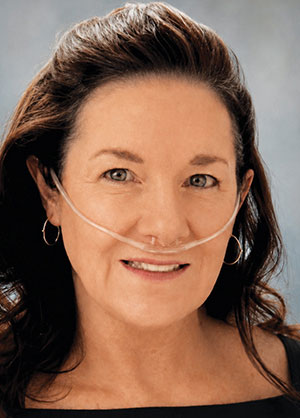
Colleen Connor, who has pulmonary arterial hypertension, used liquid oxygen from 2007 until her supplier discontinued the service. In 2022, she contacted about 50 organizations, including DME suppliers, hospitals, medical teams and even industrial oxygen companies, but was unable to find another provider willing and able to serve her.
Today, Connor requires 10 liters per minute and receives 15 compressed gas tanks per week. That gives her about 12 hours outside the home, much of it spent traveling to and from medical appointments.
“They establish these limits, which I understand because they cannot afford to service me based on their reimbursement,” Connor said. “But for most patients, they don’t understand it, and anger gets directed at the DME supplier.”
The limit forces Connor to ration not only her oxygen, but also her mobility.
“I don’t have enough oxygen to see friends,” said Connor.
Related reading:
High-flow patients, providers caught in liquid oxygen squeeze.

Comments