AASM president says CPAP therapy needs stronger handoff

By Tracy Orzel, Managing Editor
Updated 9:24 AM CDT, Fri July 10, 2026
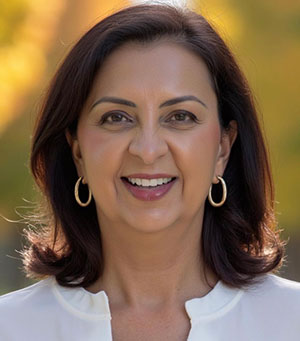 BALTIMORE – CPAP setup starts long before a box lands on a patient’s doorstep, says Dr. Fariha Abbasi-Feinberg, the new president of the American Academy of Sleep Medicine (AASM). She spoke to HME News about how to balance the handoff between sleep practices and durable medical equipment (DME) providers.
HME News: What do you see as the biggest practical barriers right now between diagnosis, setup and long-term adherence?
Dr. Fariha Abbasi-Feinberg: I think that access to care is the biggest issue. Some practices are booked out months – there's such a delay – and I think this really affects the CPAP providers, as well. The other issue CPAP providers face is they need good documentation from us. They can't do this if we don't have all the paperwork filled out the way that they need to. Often there's this back and forth between sleep practices and DME providers in terms of: Do you have the right diagnosis? Do you have the pre-sleep study note? Do you have this? Do you have that? And I think that's a real challenge for folks that are in the DME space.
HME: What could CPAP providers be doing better?
Dr. Abbasi-Feinberg: They need to be the first line to provide the education in terms of the CPAP machine. We think it's all so easy, but for a lot of patients, this is something that is so brand new and so intimidating. To have somebody sit down and really teach them what the machine is capable of, what things they can adjust, what things they can't adjust. You can't just look at somebody's face and say, “Here, this is what I'm sending you home with.” It really helps to show the patients how to put it on.
HME: What should CPAP providers take away from GLP-1s, wearables, oral appliances and other changes in the sleep market?
Dr. Abbasi-Feinberg: Sleep apnea is a serious problem, and they’ve raised awareness that there are options available for patients, so I see this as a real positive thing. Unfortunately, there's still a stigma around CPAP usage. They don't know what a new CPAP mask looks like. They don't know that the machines are better. They don't know that the process is so much smoother now than it used to be. So, I like the fact that these new ways to evaluate people and new treatment options bring people into the door.
- Related: Sleep therapy growth at inflection point.
Comments