Hire smart, care hard, go digital: Indie leaders share playbook

By Theresa Flaherty
Updated 9:28 AM CST, Fri November 14, 2025
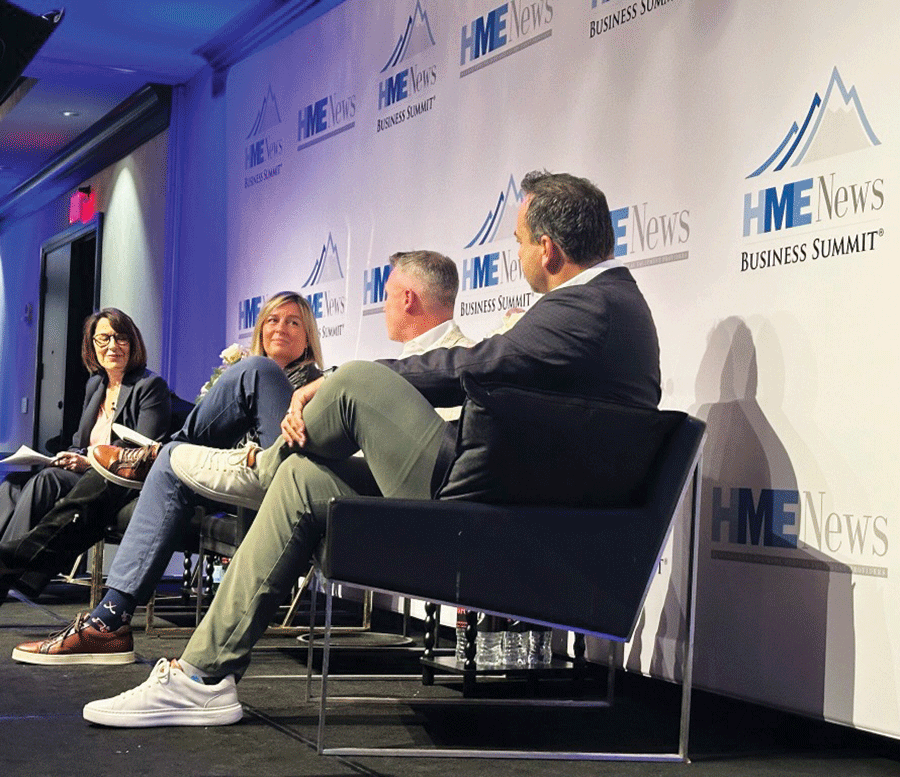
CLEVELAND – People, patients and platforms are the building blocks for success, leaders from three successful independent companies said during the recent HME News Business Summit.
Miriam Lieber, president of Lieber Consulting, led a panel discussion on how these well-established, family-owned companies are navigating the shifting health care landscape. Joining Lieber were:
- Sherry Krug, COO, Binson's Medical Equipment & Supplies
- Casey Toomajian, CEO, Hometown Healthcare
- Shawn Weiman, president, Nunn's Home Medical
Hire the right people
Weiman says in an independent company, it’s critical to build a strong workforce culture to attract – and retain – good employees. He says the process starts before employment even begins.
“Before we hire someone, we have them shadow the department (they’d be working in),” he said. “We also conduct ‘stay’ interviews twice a year, so that we can follow up. We want people to build careers and stay.”
Krug makes it a point to meet with all new employees to check in and encourage building a future at the company.
“There’s not enough money in DME, (but with hard work), you can go from CSR to CEO,” she said. “I try to make people (aware), there’s no limit to potential (for growth).”
Create the best patient experience
When it comes to creating the best patient experience, it’s important to interact with patients in the way they prefer, says Weiman.
“Find out which way is the best way (for that individual patient), whether it's a text or a phone call,” he said. “We have interactive tools where patients can self-schedule. If you are not doing that, you are behind.”
But Krug says that doesn’t mean providers should be completely hands off, even in the age of artificial intelligence. She says Binson’s has physical patient care centers that give it a competitive advantage.
“We saw a huge drop in compliance when we started shipping CPAP,” she said. “So, we like in-person setups, but we often do virtual. And we have retail.”
Leverage remote patient monitoring
Remote patient monitoring is no longer a “nice to have,” it’s a must-have, says Toomajian. Hometown Healthcare’s remote managed care platforms for sleep apnea and COPD, for example, allow the company to quickly identify potential problems with patients, he said.
“AI can troubleshoot or escalate,” he said. “For our tele-respiratory, there are lists and a series of assessments that can surface issues (and) flag them, so we can flag that to the physicians.”

Comments