Resmed’s Mick Farrell takes helm at AdvaMed, highlighting medtech’s push toward holistic, connected care
By Liz Beaulieu, Editor
Updated 11:23 AM CST, Fri January 23, 2026
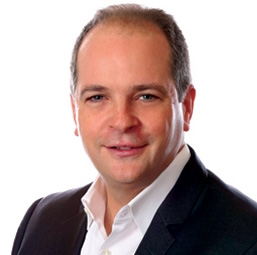 WASHINGTON – Resmed CEO Mick Farrell has become the first leader from the home care sector to chair the board of directors at AdvaMed, the trade association representing major medtech companies. His appointment signals what AdvaMed officials – and Farrell himself – describe as the continued blurring of boundaries across health care segments.
“Since Mick joined AdvaMed in 2015, the amount of technology in the home has expanded quite significantly, and the number of companies doing product development and innovation outside of a traditional hospital setting has expanded, as well,” said Scott Whitaker, AdvaMed’s president and CEO, during a Jan. 21 press conference. “So, it might not be what it was to say, ‘HME is one category of medical technology and then there’s everything else.’ I think the move is going more and more toward home health care settings to treat and monitor diseases across the board, and I think it’s an industry-wide focus now, not just those who have traditionally been in this space. Mick’s leadership at Resmed can be very beneficial to companies who are thinking about expanding into that space and understanding it better.”
Farrell agreed that the industry is converging around more integrated, proactive models.
“It’s almost like we’re talking about consumer companies and medtech companies, and the circles are coming together,” he said. “I think the same thing is happening between hospital care, post-acute care and home care.”
Farrell’s priorities for AdvaMed
Farrell’s agenda centers on five themes that reflect the pivot toward more accessible, data‑driven, global and patient‑centered care.
- Patient‑first innovation. Farrell underscored that while medtech companies serve many stakeholders, including physicians and payers, the ultimate focus must remain on the patient. “It’s never forgetting that in health care the No. 1 customer is always that person who wants to have a better life, a longer life, a more fulfilling life,” he said.
- Digital transformation. AdvaMed’s growing digital initiatives, including a new digital transformation division, are central to Farrell’s vision. He believes technologies like machine learning, AI and generative AI can “bend the curve” of chronic disease by making health care more efficient and improving outcomes.
- Global access. Although 70% of medtech is manufactured in the U.S., Farrell stressed the importance of equitable global distribution. “I grew up in Australia,” he said. “I think Aussies should get access to care, too.”
- Care everywhere. This priority emphasizes expanding access across all care settings. “Care everywhere – it's not just the hospital, it’s not just the outpatient, it’s also in the home,” Farrell said. “That creates holistic access to care. People are (even) finding access to things like their pulse rate and heart rate, and they want to say, ‘How can I use this information?’ That’s what care everywhere means.”
- Personalization of the health care journey. As wearables and consumer health tools surge, Farrell highlighted the need to better define wellness data and medical diagnostics. “People are probably getting overwhelmed with data,” he said. “What we want to turn it into is actionable information.”
AdvaMed’s position on tariffs
During a Q&A session, Farrell and Whitaker addressed ongoing trade discussions with the current administration. In the past, AdvaMed’s has pushed for a “zero for zero” reciprocal, tariff‑free trade framework for medtech. Now, Whitaker said, the organization is aiming for predictability.
“The ultimate goal is to get to a stable policy environment on tariffs – whether that’s 15%, 10%, 5%,” he said. “That’s where we need to be so we can manage to that. Our preference remains zero, but what’s most challenging is a moving target. They’re very engaged with us; they just haven’t shifted to our policy solutions yet. But I’m not giving up and eventually I believe we’ll get to a better place.”
Farrell reiterated support for tariff-free trade, while acknowledging practical realities.
“On a humanitarian level, we really want to have zero for zero tariffs, but a certainty is better than aiming for perfection,” he said.

Comments