High gas prices squeeze HME providers, but most aren’t adjusting operations – yet

By Liz Beaulieu, Editor
Updated 10:11 AM CDT, Fri May 29, 2026
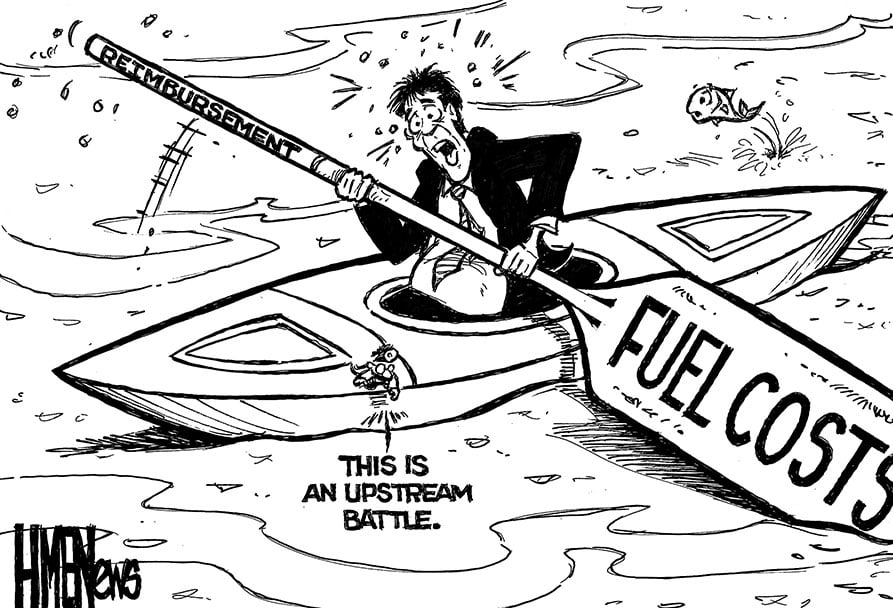
YARMOUTH, Maine – Nearly 80% of respondents to a recent HME Newspoll say high gas prices are having a moderate to significant negative impact on their businesses, putting further pressure on already thin margins.
While prices vary by geography, the national average was $4.42 per gallon at press time, compared to $3.16 a year ago – an increase of nearly 40%, according to AAA.
“Our profit margins were already slim before, so higher fuel costs have further reduced margins, increased operating expenses and impacted customer spending behavior,” wrote one poll respondent.
Respondents hold steady
Despite the financial strain, most respondents have yet to make major operational changes. About 62% of respondents say they have made only minor or no adjustments to deliveries or service calls. Another 21% say they are considering changes, while 17% report making significant changes.
“We do a lot of drop shipments,” wrote one respondent. “Our community services, we have no choice but to continue, although we do more closely watch idle time and (are) reviewing our fuel program provider for alternatives.”
Others have begun to adapt their operations: “I have had to consolidate routes,” wrote one respondent.
Costs rising across the board
Respondents say the impact of high gas prices extends beyond delivery logistics, driving up product and freight costs, as well – while reimbursement rates remain fixed.
- “(The) impact is on deliveries we have to make (and) on supplies we purchase and (the) increased delivery charges on those, while having fixed reimbursement for most items,” one respondent wrote.
- “My freight cost has increased 15% at this time,” wrote another respondent, “and I’m expecting it to go higher.”
- “Fuel prices affect price of product and freight costs, in addition to patient deliveries,” wrote one respondent. “With reduced reimbursement and the use of these TPA companies and (being) forced to use e-prescribe – those costs are squeezing us. We are reducing staff, as a result, which affects patient care.”
Ongoing concern for the months ahead
Looking ahead, nearly half of respondents remain worried. Forty-eight percent say they are very concerned about gas prices as a business risk over the next six months, suggesting continued volatility and limited relief.
“It’s very hard for an independent company to stay in business,” wrote one respondent.
Cartoon credit: Steve Meyers for HME News.

Comments