Cubby Beds builds advocacy role while driving research With 15K beds shipped and 7 million nights slept, the company is doubling down on provider outreach, peer-reviewed research

By Liz Beaulieu, Editor
Updated 10:10 AM CST, Fri December 19, 2025
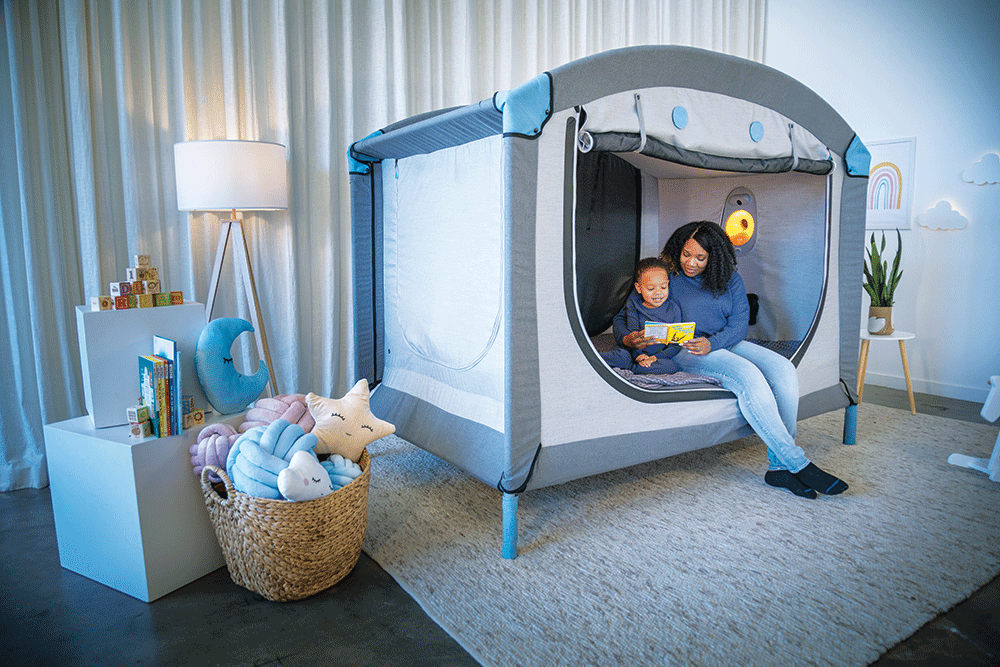
DENVER – Cubby Beds is ramping up efforts to grow its network of durable medical equipment (DME) providers and publish more research—strategies aimed at improving market reach and patient access to its smart beds for children with neurodisabilities.
Cubby Bed’s growth story – so far
Since launching in 2020, Founder and CEO Caleb Polley says the company has grown from a one-person operation in a garage to more than 100 employees across their office and operations. To date, Cubby Beds has shipped more than 15,000 beds and has helped families get over 7 million nights of safer sleep.
“In 2016, I stumbled across a competitor and thought it could be an interesting business model to offer something more friendly and more modern, and then add technology with remote patient monitoring,” he said. “From 2016-19, I worked on it on weekends, trying to raise money by participating in dozens of pitch competitions and through grants. I quit my job in 2019 and launched early in 2020.”
Polley’s inspiration was also personal: His childhood friend had a neurodisability, and he saw firsthand how critical a safe, appropriate sleeping environment was for both the child and the family.
Developing advocacy role
Cubby Beds is hiring territory sales managers in the Midwest, South Atlantic and Southeast to expand its network of DME providers who can qualify families for its products. The company already partners with several national DME providers and has over 400 active DME locations but aims to strengthen relationships with smaller independent providers.
“The small, independent providers are really good at service and they’re really good at personalization,” Polley said. “They’re the ones bringing the beds to schools and fairs (for children with special needs).”
These sales managers will also work with providers to educate referral sources, such as children’s hospitals, and assist families with insurance coverage and requirements.
“How do we be a better advocate,” he said. “We’re at a point where we can work on behalf of families, working along with providers. These families are stressed, so how can we help on their behalf?”
Dialing into ‘strong proof points’
Cubby Beds recently published findings from a 225-caregiver survey in the Journal of Applied Research in Intellectual Disabilities, showing that its beds improve sleep and safety for children with neurodisabilities. Caregivers reported significant gains in sleep duration – from four to six hours to eight to 10 hours per night – and reductions in self-injurious behaviors, minor injuries, and elopement incidents.
“This is the first-ever research on enclosed beds,” Polley said.
Looking ahead, Cubby Beds plans to prioritize research in 2026. The company is also working with Cara Masselink, former executive director of The Clinician Task Force and professor in the occupational therapy department at Western Michigan University, on two additional two peer-reviewed studies.
“We want to create evidence that Cubby Beds improves health outcomes,” Polley said. “We want to do much bigger studies that dial into efficacy and strong proof points that it’s medically necessary, improves outcomes and reduces costs.”

Comments